

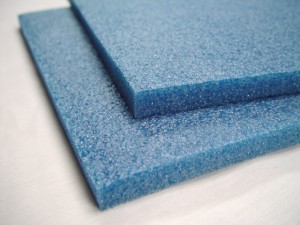
Polyethylene foam is one of the most adaptable and heavily utilized materials in the foam industry, yet it remains less recognized compared to more familiar options like polystyrene or polyurethane. Most people instantly recognize rigid “styrofoam” or the soft cushioning of upholstery foam, but polyethylene is quietly performing countless essential functions—providing flotation, absorbing impacts, insulating structures, and protecting valuable products. Whether or not we notice it, polyethylene is at work every day across commercial, industrial, and residential environments.
Closed-Cell Structure and Core Performance Benefits
One of the defining features of polyethylene foam is its closed-cell construction. Instead of interconnected cells that allow airflow and moisture transfer, polyethylene contains millions of sealed bubbles. This structure creates a water-resistant, buoyant, strong material capable of withstanding demanding environments. Its resistance to moisture, mold, mildew, and bacteria makes it ideal for marine applications, long-term packaging, and hygienic storage. Meanwhile, its resistance to solvents, fuels, and petroleum products expands its usefulness in industrial settings.
Despite its rigidity, polyethylene offers excellent resilience. The material compresses under load but returns to its original shape, providing shock absorption without permanent deformation. This balance of firmness and recovery is a key reason polyethylene is preferred for protection, load support, and high-impact applications.
How Additives Enhance Polyethylene’s Performance
Polyethylene is formed by heating polymer compounds and introducing blowing agents to create its closed-cell structure. During this process, manufacturers can incorporate additives directly into the formula to achieve specialized performance characteristics. Anti-static polyethylene, for example, is engineered to dissipate electrostatic discharge, making it essential for shipping, storing, and handling delicate electronics.
Because these additives are built into the material—not applied as external coatings—they remain effective throughout the foam’s entire lifespan. Colorants may also be added during production for branding purposes or to support visual organization systems. Additionally, polyethylene is manufactured in a range of densities; higher-density varieties offer smaller cell structures, greater rigidity, and increased load-bearing ability.
Forms, Formats, and Structural Options
Polyethylene’s versatility becomes even more apparent when exploring its many forms. Sheets and planks are the most widely used, supporting applications such as industrial packaging inserts, tool case interiors, thermal barriers, and shock-absorbing transport solutions. Their rigidity enables clean cutting and precise shaping, which is essential for creating custom packaging.
Thicker components can be produced by laminating sheets, making them suitable for flotation devices, heavy-duty padding, or custom furniture components. The material’s natural resistance to moisture also makes it an effective thermal and vapor barrier, especially in construction.
Rolls, Cylinders, and Specialized Industrial Uses
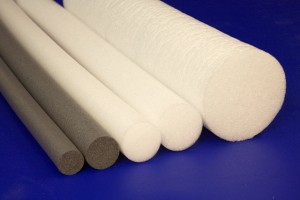
When manufactured in thin gauges, polyethylene forms lightweight, flexible rolls that are useful for pipe insulation, under-floor moisture barriers, foundation seals, and protective wrapping. These rolls provide insulation without adding unnecessary bulk, making them a cost-effective solution in building and materials handling.
Cylindrical forms of polyethylene are also widely recognized—most notably as pool noodles. However, these cylinders also serve professional purposes such as bolsters, flotation supports, and padding in industrial and recreational equipment. On a smaller scale, polyethylene is extruded into narrow tubing used as backer rod, a vital component in concrete expansion joints. Backer rod ensures proper sealant depth, reduces material waste, and supports expansion and contraction across temperature variations.
Cross-Linked Polyethylene Variations
Polyethylene is available in both physically and chemically cross-linked compositions. Chemically cross-linked polyethylene undergoes bonding under external heat or pressure, resulting in superior durability, uniform cell structure, and improved resistance to compression.
Physically cross-linked polyethylene bonds naturally and offers greater flexibility during processing, though it is slightly less rigid. Each type serves distinct use cases depending on the performance expectations of the end application.
A Material With Nearly Unlimited Applications
The broad spectrum of polyethylene foam variations—combined with its durability, resistance, and customizable nature—positions it as one of the most versatile foam materials available today. From packaging and flotation to construction, insulation, and industrial protection, polyethylene consistently delivers dependable results in environments where performance and longevity are essential. Whether for personal projects, commercial production, or large-scale industrial applications, there is a polyethylene formulation capable of meeting the strictest requirements.



Can I use polyethylene foam underlay to keep a cold water bottle stay cold longer?
Yes, polyethylene foam can be used for insulation purposes.
Can polyethylene foam be used for sound absorption?
Yes our polyethylene, specifically polyethylene roll, can be used for sound deadening applications. For sound absorption, we would suggest our open cell acoustic solutions like the acoustic wedge or acoustic eggcrate foam.
Is polyethyelen foam Flexible? Can it be made in 4 to 6 inch thick sheets which can be rolled.
Typically anything 1-1/2″ and thinner can be rolled. This is in regards to the 2.2lb density and less. Anything thicker is not able to be rolled.
Is it possible for polyethylene to sink in water? Not float?
All the polyethylene we currently carry will float. This includes 1.2LB to 9LB densities.
Can it be used as padding material, for example in garments – shoulder pads, bra cups, etc. How do costs compare with polyurethane foams? tks
Either our polyethylene roll or our Volara foam could be used that application. As always, be sure to test the foam out to see if it fits your needs and application.
Can you use it to make a therapeutic wedge to put under the mattress and raise the head of the bed?
Typically our conventional foam can be used for this purpose. Please contact us for a price quote.
I have a few polyethylene foam noodles that were squished while packed in boxes for several years. (they lost their original cylindrical shape) Is there a way to return them to their former form or is the polyethylene foam damaged beyond repair?
If after 1 to 2 weeks the foam does not come back, then they are considered damaged and cannot be repaired.
can you give me an idea of the rigidness of the different densities of closed cell polyethylene foam sheets?
Closed cell polyethylene foam is considered firm and gets gradually more firm as you go higher up in density. 3LB and up becomes more difficult to roll. Foams less than 3LB density are more easily roll-able.
I have installed self-regulating heat tape on water pipes in my unheated crawl space. The crawl space is insulated and has vapour barrier covering the ground. Can I use closed cell polyethylene foam tubing to insulate the pipes, I.e. also put insulation over the heat tape. My concern is what would happen if the heat tape malfunctioned and got too hot. Would the foam insulation then be a fire hazard?
Thanks,
Peter
Our datasheets give a usable temperature range for the polyethylene foam. If the heat of the pipes is under this range, then the foam can be used for that purpose. Polyethylene data sheets.
Can you guy cut into the size i want ? Example:
instead of 1 of 24″ x 48″
i want 288 of 2″ x 2″
Yes, please contact us directly for a price quote.
Is Polyethylene Foam used in insulating ceilings flammable?
Polyethylene can come in both fire retardant and non-fire retardant types. The seller will know either way if you ask.
I need to insulate 6 three gallon buckets of ice cream for an outdoor wedding in June. Outside, we don’t have electricity. Dry ice would sublimate to quickly & be really expensive. Thinking of putting the 3 gal buckets (12″x10″) into a 5 gal bucket (15″x11″) and putting some kind of foam in between the walls to insulate. Not much space there, but possibly for 2 hrs or until it’s gone it might keep it stiff. Any thoughts????
We would suggest our 2.2lb density polyethylene foam for your application. The R values can be found on the polyethylene foam datasheet.
Is the polyethylene foam food grade? Is it safe for use as a play mat?
Which is the best foam for thermal insulation??
Closest available we have to food grade foam is our Volara foam. This could be used as a play mat.
Polyethylene foam can be used for thermal insulation. Please see the polyethylene foam data sheet for more details.
Can polyethylene foam be used as a raft for outdoor aquaponics?
The non-fire-retardant type should reduce the chemicals, but will they still break down under UV exposure?
Can they be painted to prevent this?
The foam will float, most of our polyethylene foams are not fire retardant. To reduce the effects of UV exposure, the foam can be covered with another material, such as a weed barrier to help protect the foam.
Can I use the 1/2” foam to seal between 6×8 squared logs in a house/cabin construction? Will it compress over time or loose its seal?
1/4″ to 1/2″ of polyethylene 2.2lb foam polyethylene 2.2lb foam polyethylene 2.2lb foam is suggested for your application.
What density of EPE foam is generally used in hybrid guitar cases?
1.7lb to 2.2lb density
What material can be used / is recommended to protect your polyethylene foams to reduce the effect of UV exposure? Thanks.
Are polyethylene foam noodles acid free? Do you add any other material to the polyethylene? I am considering using them for long term storage of textiles and do not want other chemicals besides polyethylene.
A UV resistant fabric can be applied / glued to the surface of the polyethylene foam.
To the best of our knowledge our polyethylene foam does not contain acid.
Is polyethylene foam good for boat flotation inside a sealed hull and around fuel tanks etc?
Yes, polyethylene could be used for that purpose. However, keep in mind that typical polyethylene foam is not fire retardant.
Can polyethylene sheets be used in expansion joints in PCC paving as filler material?
Yes. We typically recommend our Polyethylene Solid Tube for this application.
Is Polythylene chemically neutral and acid free (for archival storage use)?
To the best of our knowledge, our Polyethylene foam does not contain acid.
Can PE foam be painted? I so, please advise type of paint. Thank you!
Mary Eveland-Goehringer
Yes, Polyethylene foam can be painted. We would suggest a latex-based paint, rather than an oil-based paint.
Can PE foam be used with electrical components reaching 100C temperatures?
The only foam that we carry that can bear these temperatures is our Neoprene foam, which can bear temperatures up to 220 degrees Fahrenheit.
Can polyethylene foam be used as carpet padding?
Please Contact Us for help finding the best for foam your application.
Hello, good morning.
Can it be used for raft floating boards for use in aquaponia?
Is it food grade, with certificate? And natural or white color, no other additives.
How can I get a sample? (Or a good picture )
Could you please give me standard price per sheet or m2 ,
Thanks in advance,
José
Please Contact Us by e-mail for more information.
Can polyethylene Foam or amy other foam be used to recover a soft surfboard or repair a any info on what is the toughest or best foam available 2.4m x 1.0m x 3mm if possable
Can PE foam be inserted in the rubber tubing in the weatherstrip of car doors to minimize the rubber from becoming deformed over time which would hopefully lengthen the lifespan of said tubings?
Please Contact Us for more information regarding the best foam for your application.
Please Contact Us for more information on the best product for your application.
I will be using polyethylene close cell foam pads for a dance studio floor to absorb the shock. Is this foam fire retardant and do you know the fire retardant specs. for this product or where I can find them? The Fire Marshall in our Village requires these specs.
Our Polyethylene foam does not contain any fire retardant additives, and is not considered a fire retardant material. The only foam that we carry that would work for this application that is also fire retardant is our Minicel LF200 foam. Please Contact Us for further information.
Can PE foam be used to heat proof the ceilings and save the interiors from overheating in summer?
Polyethylene can be used for this application, but Polystyrene is typically more effective for this purpose.
Can we used this for bra cups
Please Contact Us for recommendations for the best foam for your application.
Can Volara foam be used as a barrier between ground and a swimming pool liner. I’m thinking of putting something down to stop roots or stones or anything else poking through the liner..
Please Contact Us for more information on the best product for your application.
I AM LOOKING FOR TWO SOLID 6 INCH ROUND BY 3 FOOT LONG FOAM CYLINDERS TO BE USED AS OUTRIGGERS FOR A CANOE. THEY MUST BE HARD.
For this application, we recommend our Polyethylene Cylinders.
I’m looking for a petroleum resistant buoyancy foam for under the floor of my boat what would be the best option? Need 2” thick
For your application, we would recommend any of our Polyethylene foams.
what product can i use to repair a gouge in polyethylene foam?
Please Contact Us for more information regarding your request.
Are your 12 pack foam noodles non-toxic under Federal Guidelines to attach to baby crib rails?
Unfortunately, we do not recommend any of our foam for use with baby cribs. Please Contact Us if there is anything else we can help you with!
I am looking for a soft foam that is stable and will not disintegrate or shed dust for long term storage of vintage microphones. They will be kept in a controlled studio climate, but I need to know the foam will not deteriorate. Can you inform me on this matter?
Please Contact Us for further information regarding your inquiry.
Can polyethylene foam be used as an insulating hot tub cover? Do you sell a UV resistant variety of yes? Need a odd shaped size so unable to purchase.
The foam recommended for hot tub covers is our Polystyrene foam.
I’m bought a 2.6m x 107* x 0.56 above the ground soft side pool that will be standing on paving. I want to know if I can use polyethylene for padding under the swimming pool. If so, what thickness and density would you advise. I’m looking at 33 and 30mm. Will this be an overkill? Thanks.
For this application, we would recommend our 2.2lb Polyethylene at 1/2″ thick or more. Please Contact Us directly for sizing and pricing information.
Does polyethylene foam is bouyant can I make them as collar for the boat?
For boat collars, we recommend our Minicel T300 foam or our 3lb Crosslinked Polyethylene foam.
Do you recommend polyethylene foam as base material under ensolite foam for the use as martial arts flooring? If so which density of polyethylene foam would you suggest in case of throw-heavy and ground-work focused martial arts (Judo/Wrestling/BJJ)?
Thank you in advance!
Please Contact Us for further information regarding your application.
Is solid 2# PE plank more rigid than laminated 2# PE planks or are there differences in 2# PE planks? I’ve noticed since getting laminated planks it doesn’t seem as tough as the solid ones I’ve had in the past.
Lamination should not create a change in rigidity, as long as the two samples are the same thickness and the same density Polyethylene foam.
What is the lifespan of this product in a non-exposed installation? No UV. No liquid water but water vapor.
Will the material break down, lose internal cohesion or turn brittle over span of say 40 to 50 years?
100 years?
Thank you,
Please Contact Usfor further information regarding your inquiry.
Would you recommend this foam to slightly raise the height of our metal chairs without significantly compressing over time?
Please Contact Usfor further information regarding your application.
How much can polyethylene foam hold up per square foot, and for how long?
Please Contact Usfor more information regarding your inquiry.
Can the polyethylene foam be used to wrap outdoor planters? How will it stand up to all season weather?
Yes, the Polyethylenefoam can be used for this application. It is a closed-cell foam, so it is water resistant. It has not been specifically tested for the application, though, so you would likely need to test the product.
What foam would be the best application for Backpack straps and back support/softness? The backpacks will be pretty heavy. Will I be able to sew through the foam? I have an industrial machine.
The foam that we would suggest for your application is our Mincel T200. None of our foams have been specifically tested for the application, so you would need to test to confirm they will work for what you are looking to do with the foam.
Afternoon can PE-LD 04 foam be used for upholstery and what glue can i use to glue them together. Thank you
Please Contact Usfor more information regarding your inquiry.
Which Density of polyethylene foam is suitable for low pressure water or chemical gasket in stainless steel flange?
Hello,
Thank you for reaching out to Foam By Mail.
For this application, we suggest using the Neoprene foam for gaskets.
The foam must be oil/water resistant, work with heat, and be durable and flexible. As the foam will need to flex and expand to fill gaps, creating air-tight seals.
Neoprene
What PE foam could be coated/encapsulated that would not off gas? All testing to date has shown the foam to off gas, causing bubbles in the coating.
We had been spraying PE with a polyurea style coating, for outdoor recreational products. Our difficulty has been off-gasing with the PE foam causing large bubbles to form under the Polyurea coating. We had worked with our supplier and have done sanding, we have attempted to ‘dry ‘the foam with heat, and even just ‘seasoning it’ by letting it sit for extended periods of time prior to coating…all with less than desired outcomes.
Do you have any suggestions on the off-gasing? We like the polyurea coatings. Would a nitrogen based foam product be better?
We have never tested this specific application on our foam, so we are unsure if this would work or how the foam reaction will be.
But typically closed cell foam does not have an off-gassing smell. It seems like the coating you are using is having a chemical reaction to the foam causing the off-gassing smell. It seems like the coating is what is off-gassing not the foam itself.
Do you carry foam that has an adhesive on one side & the other side static cling?
I am sorry, we do not. What do you want to use the product for?
Can this foam be trusted and used in protective gear for extreme sports such as skateboarding, inline skating, BMX?
Yes, we commonly see 2LB density cross linked polyethylene and the Minicel T200 used in these applications.