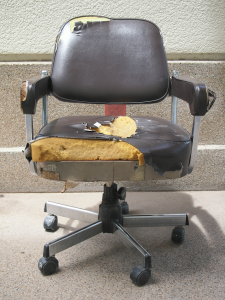
Over time, even the best office chairs lose their comfort, which means it might be time for office chair reupholstery. Continuous compression, daily use, and material fatigue cause seat foam to break down, flatten, and lose its ability to provide proper support. What once felt firm and ergonomic slowly turns into a sagging, uncomfortable surface that can contribute to poor posture, pressure points, and fatigue during long workdays. While many people assume this means replacing the entire chair, that’s rarely necessary.
A far more efficient and cost-effective solution is replacing the foam cushion and upholstery, rather than the full chair structure. With custom-cut foam, you can restore comfort, improve support, and extend the life of your chair without the expense of buying a new one. This project is simple, requires minimal tools, and can typically be completed in about an hour, even for beginners. From a materials perspective, foam replacement restores structural performance without unnecessary waste or cost.
Why Foam Replacement Works
Seat cushions fail long before chair frames do. The structural components of most office chairs—metal frames, plastic bases, and support mechanisms—are engineered for long-term durability. The foam, however, is a consumable comfort layer that degrades under repeated compression cycles. Replacing only the foam restores the chair’s functional comfort while preserving the integrity of the original structure.
This approach delivers improved ergonomics, better pressure distribution, and extended product lifespan at a fraction of the cost of full replacement.
Materials and Tools Required
For a proper foam replacement project, you’ll need seat cushion foam in your desired thickness and firmness, fiberfill wrap for surface softness and contouring, upholstery fabric for the new cover, foam adhesive, a permanent marker for tracing, an electric kitchen knife for clean foam cutting, and fastening tools such as a staple gun and staples or a hammer and carpet tacks. You’ll also need basic hand tools like a screwdriver, Allen wrench, or pliers for chair disassembly and reassembly.
Step 1: Chair Disassembly
Begin by flipping the chair upside down to access the connection points between the seat, backrest, and frame. Carefully remove the seat and backrest using the appropriate tools. Once detached, separate the existing foam cushion from the plastic or wooden backing. This creates a clean working surface and allows accurate sizing for replacement materials.
Step 2: Removing Old Fabric and Foam
Remove the existing fabric and degraded foam from the wooden or plastic support structure. Most upholstery is secured with staples or adhesive. Staples can be lifted using a flat screwdriver and removed with pliers. Glued foam and fabric can typically be peeled away by hand. This step exposes the base structure and prepares it for clean bonding with new materials.
Step 3: Tracing and Cutting New Foam
Place the seat base directly onto the new foam sheet and trace its shape using a permanent marker. This ensures precise dimensional matching. Use an electric kitchen knife to cut the foam cleanly, maintaining straight edges and consistent thickness. Then cut the fiberfill wrap to match the foam dimensions, allowing an additional two inches of overlap around the edges to create smooth transitions and rounded contours.
If you prefer not to cut foam yourself, we offer custom seat cushions and replacement cushions where you simply select your shape and dimensions for precision fabrication.
Step 4: Layering and Upholstering
Position the foam cushion on the base, wrap it evenly with fiberfill, and then place the upholstery fabric over the assembly. The fabric should extend beyond the edges to allow secure folding and tensioning. Pull the fabric tight and secure it with staples, working evenly around the perimeter to maintain uniform tension and prevent surface wrinkles. This creates a smooth, stable seating surface with consistent compression response.
Step 5: Chair Reassembly
Once the cushion assembly is complete, reattach the seat and backrest to the chair frame using the original hardware. Reverse the disassembly process carefully, ensuring all connections are secure and aligned properly. The result is a structurally restored chair with renewed comfort performance.
Performance Benefits of Foam Cushion Replacement
Replacing foam restores the mechanical support system of the chair. New foam improves load distribution, reduces pressure points, and enhances posture support. Fiberfill adds surface comfort without compromising structural integrity. The result is a seating system that performs like new without replacing the entire product. From a material-efficiency standpoint, this method reduces waste, extends product lifespan, and provides a sustainable alternative to full chair replacement.
A Practical Upgrade with Long-Term Value
Reupholstering an office chair with a foam cushion replacement is not just a cosmetic upgrade—it’s a functional restoration. It improves ergonomics, enhances comfort, and preserves structural components that are still fully operational. Instead of discarding a chair with a failed cushion layer, you’re restoring its performance characteristics at the material level.
With custom-cut foam solutions from Foam by Mail, this process becomes simple, affordable, and precise. The result is a revitalized workspace, improved daily comfort, and a technically sound solution that delivers long-term value through smart material replacement rather than unnecessary product disposal.